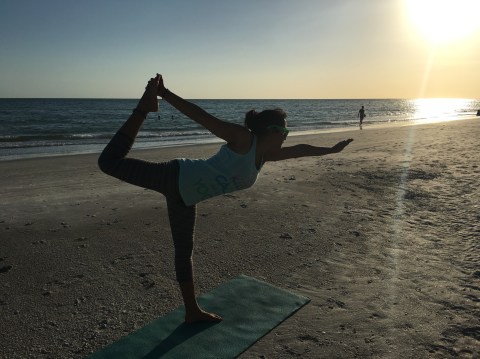
As we approach the end of Pride Month, I can’t help but notice all the social media posts promoting “inclusive yoga spaces”, spaces where communities are “safe” to be themselves in their fullest form. But what does a “safe” or “inclusive” space really mean?
In my experience, even spaces that are labeled as “safe” or “inclusive” have some kind of hierarchy or leader. When we’re trying to develop a community, shouldn’t we all have equal say in the group or circle, equal input into what’s happening? Shouldn’t each member of the community feel responsible or in charge of decisions? Likely, in many of these “safe” and “inclusive” spaces we enter, we are prone to the decision of others, following along passively.
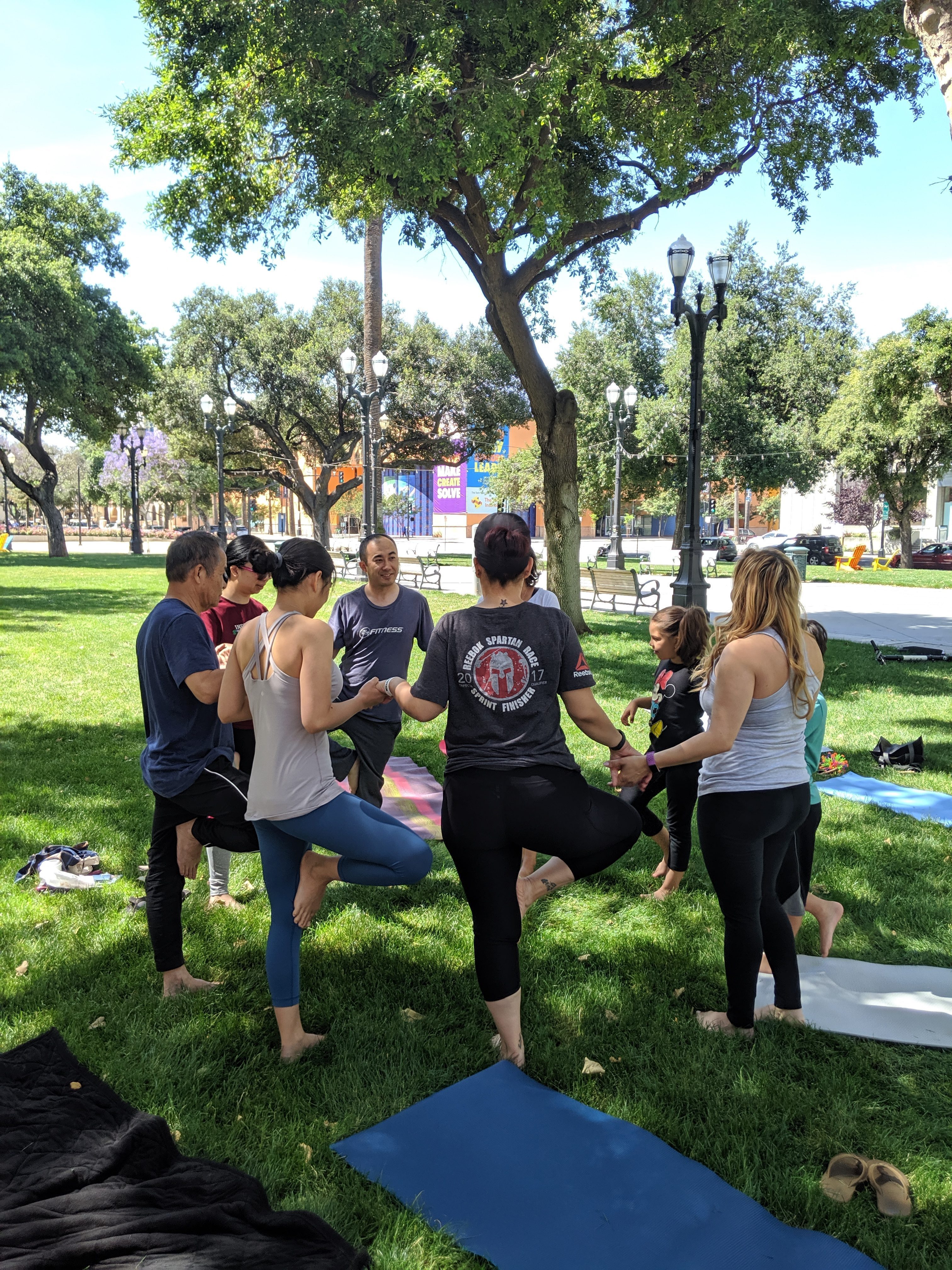
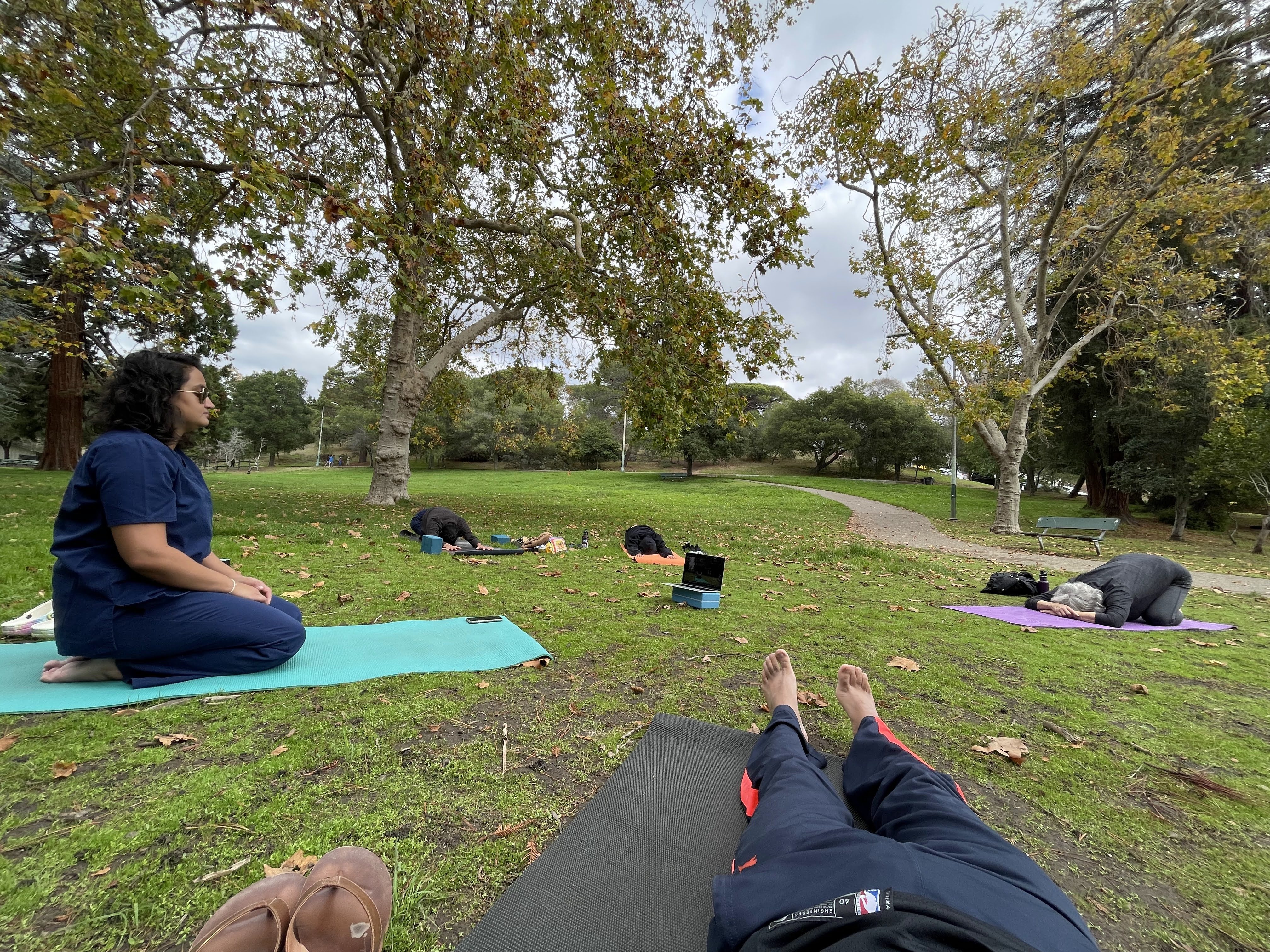
Perhaps we should think about making spaces that are “brave” and “expansive”. Anyone trying to develop community can’t guarantee a space to be safe for everyone. No matter what we do, how many safe guards we make, triggers are everywhere and we can’t prepare for every single possible trigger for every single person who shows up. So what if we try to make spaces brave? A space where community members can feel willing and able to open up, push themselves in a way they weren’t able to before. And also create space for those who may not want to push themselves, but observe others in their ability to do so as an example of what they can work towards or open up to be. And what if we created spaces together, collaboratively, where there is no hierarchy or need to “invite” others to join, but there is an open door or no door at all. There is always room for anyone to join in and be part of the space, equally as important as those who came before.
As we work to build more equitable, expansive spaces for a diverse array of practices, it’s important to also make sure voices are being heard. Think about the space you want to create, who are you inviting to create the space with you? Would anyone be able to access and benefit?
Some communities to consider:
- People living with disabilities
- People living with chronic illness/pain
- LGBTQ+ community members
- BIPOC community members
- Non-native English speakers
- Immigrant/migrant community members
- People living with different body types
- People who have previously experienced incarceration
- Youth/Transitional Age Youth
This is by no means an exhaustive list. It may inspire some thought into who is being represented and where there are gaps. It’s also important to recognize the intersectionality of individuals. Just because someone looks like they represent one community, does not mean that’s the only perspective they can have or should contribute.
 YogiDeets.com
Love this Adi, thank you for articulating this 🙏🏾❤️
xo, C.
LikeLike