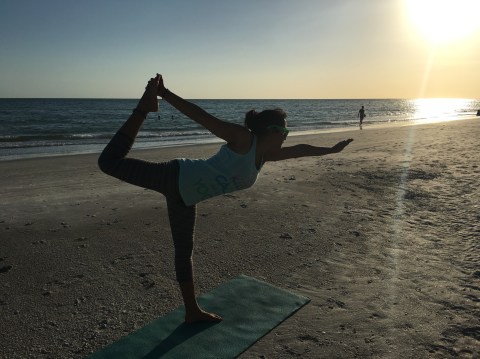
Gratitude

The year has flown by. I looked back at my post in January, at the goals I had set forth for the year. Here’s a reminder of what I set forth for myself:

  • Pay off 3 more of my student loans.
  • Sell half of the books in my online bookstore.
  • Do yoga asana and meditation 4 days out of the week.
  • Walk 1 mile each day.
  • Cook at home 4 days out of the week.
  • Meet 75% of my reading goal for the year.
  • Publish six posts in 2025.

So, what did I accomplish so far in 2025?

  • Pay off 3 more of my student loans. – I actually only have 3 loans left! BIG WIN.
  • Sell half of the books in my online bookstore. – Sold OVER half the books I had on sale.
  • Do yoga asana and meditation 4 days out of the week. – On average I do a 30 minute asana, pranayama, and meditation practice 5 days a week.
  • Walk 1 mile each day. – I was walking 1+ miles a day for a while, but work travel seems to have paused that for now.
  • Cook at home 4 days out of the week. – We actually cook at home 5-6 days out of the week!
  • Meet 75% of my reading goal for the year. – I am currently at 87% of my reading goal for 2025.
  • Publish six posts in 2025. – FAIL (but I’m okay with that)

So…I met a lot of goals. The one goal I hadn’t made and yet I seemed to excel at this year was practicing gratitude. I have not only kept a gratitude journal throughout the year, but I have also made note of my contributions to others, even the most minute contributions. It’s really helped me understand not only what I benefit from but how I also benefit others.

So, as we approach the end of this year, I’ve come back to ask you all, what are you grateful for? How have you benefited others in your life?
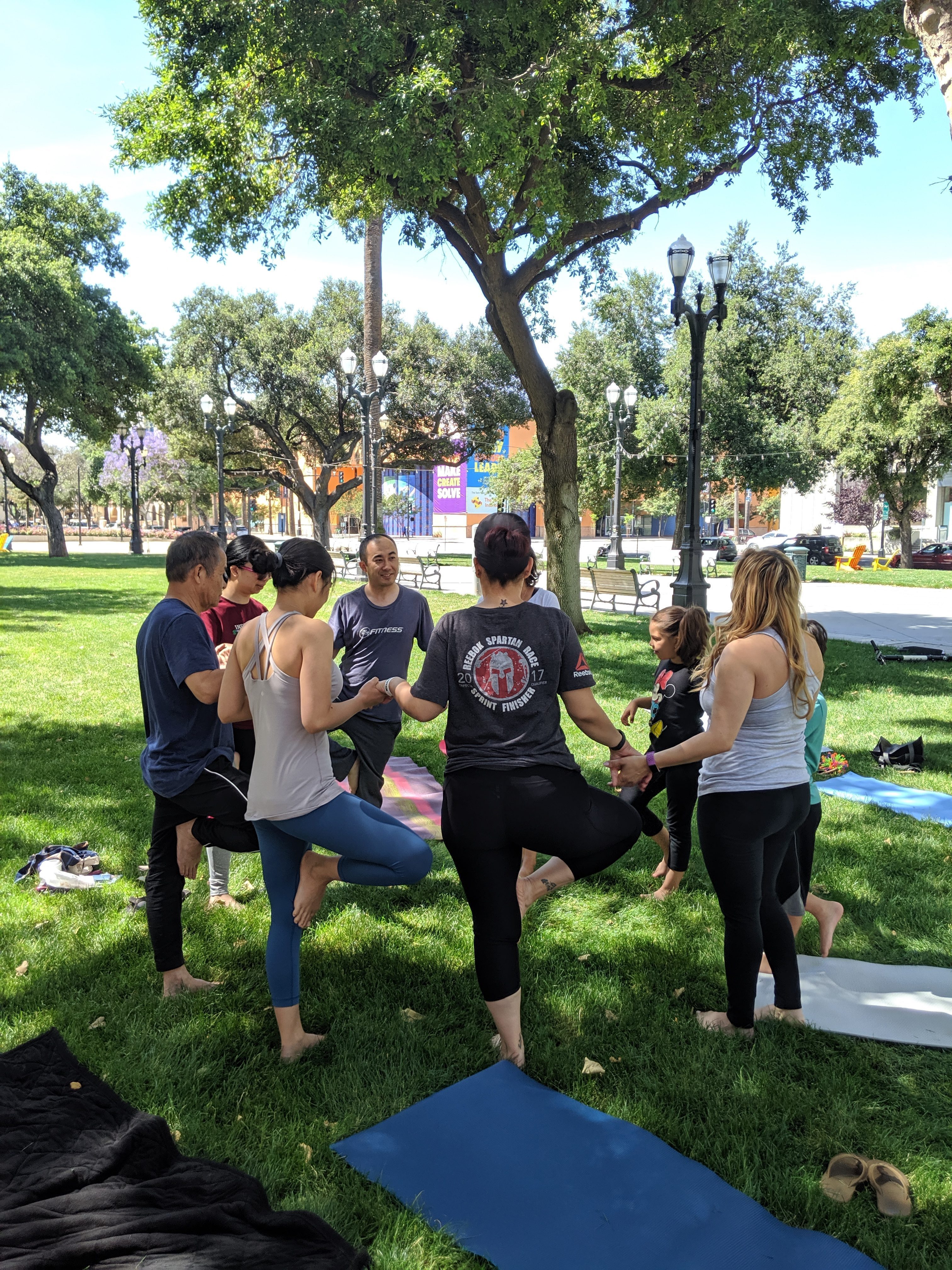
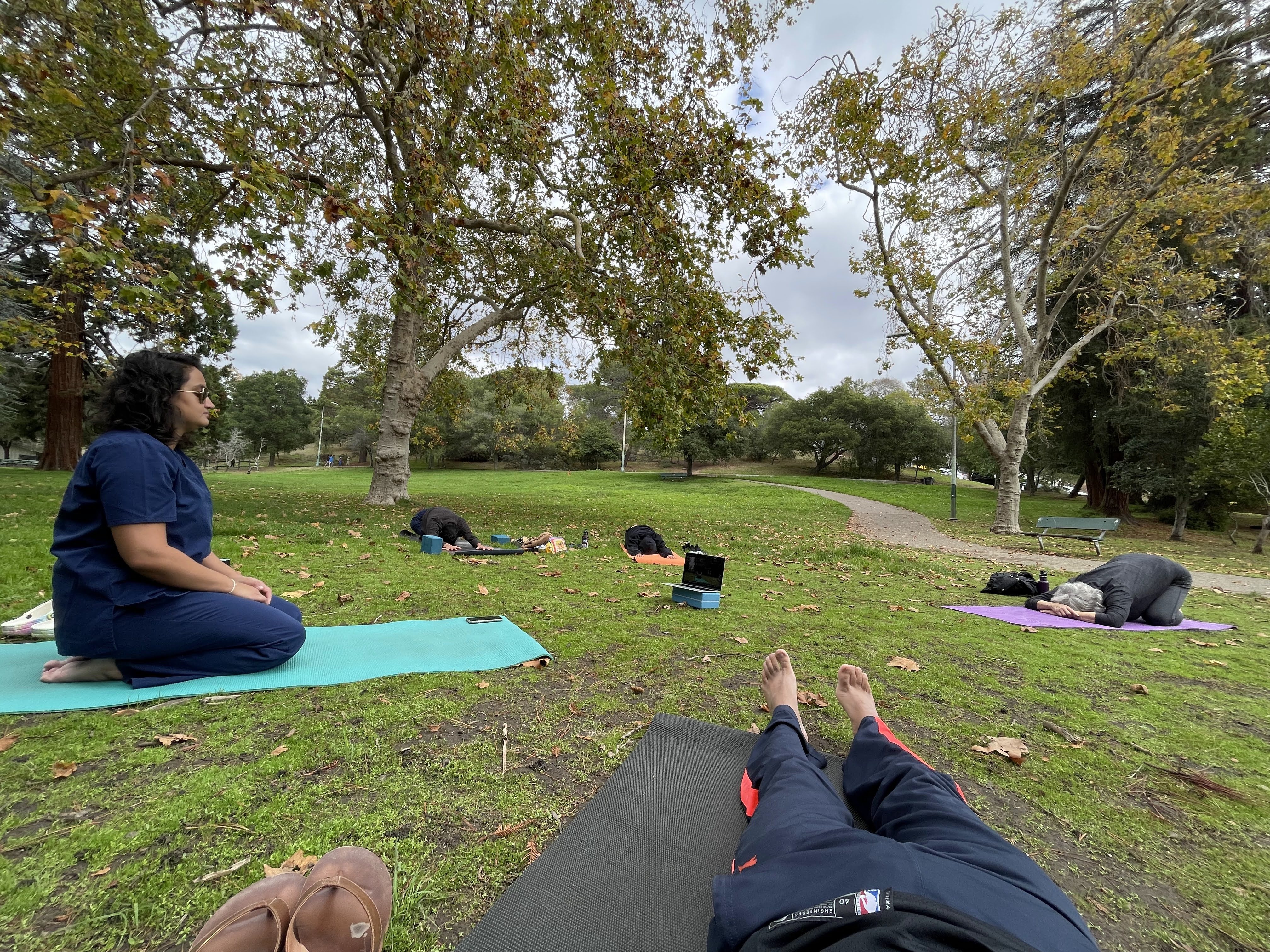
New Year’s Thoughts

As we begin a new year, I see a lot of reflection on the past year, successes and short falls as well as commitment to new year’s resolutions and new goals. It has always been a mainstream belief that failures or short falls are bad and reaching or exceeding one’s goal is good.

What is we see “failures” as opportunities to understand challenges in a new way and plan for more realistic goals in the next year?

Here are some ways I have failed this year:

  • Did not pay off my student loans.
  • Did not sell all my books in my online bookstore.
  • Did not do yoga asana or meditate every day.
  • Did not meet my daily steps goal every day.
  • Did not cook at home the majority of the year.
  • Did not exceed my reading goal for the year.
  • Did not post on my blog each month.

But are these all really “failures”? I see them more as opportunities to understand what prevented me from reaching those goals and pivot, change my mindset to set myself up for success.

So in 2025, I hope to reach the following goals which I feel are more attainable:

  • Pay off 3 more of my student loans.
  • Sell half of the books in my online bookstore.
  • Do yoga asana and meditation 4 days out of the week.
  • Walk 1 mile each day.
  • Cook at home 4 days out of the week.
  • Meet 75% of my reading goal for the year.
  • Publish six posts in 2025.

Set yourself up for success in 2025. Understand what’s realistic. It’s okay to push yourself, but push yourself within the realm of possibility!

Happy New Year!

World Mental Health Day

This month, among other health awareness days, we honored World Mental Health Awareness Day. The purpose is to raise awareness of mental health needs and to hopefully garner support, financial and societal, for mental health treatments.

Throughout my years as a yoga practitioner and instructor, I have heard many say yoga is good for mental health. While there are many ways in which yoga can support with mental health needs, there is also room for different kinds of supportive therapies and treatments for mental health needs.

Every aspect of yoga, from asana to pranayama, can support with mental health. And it’s not always going to be a one size fits all. Some folks may benefit the most from asana, others from pranayama. This doesn’t mean one should practice a single part of yoga, but possibly emphasize that part a bit more in their regular practice. Most will likely benefit from a combination, the full incorporation of all yogic practices. Similarly, some folks may need talk therapy or other forms of western medicine. Supporting mental health doesn’t have to be a choice between one treatment or another, it can and should be an overlapping of different types of supportive therapies and may evolve just as humans evolve.

Yoga can support with a great deal of things:

  • Calming the mind and body
  • Increase mental clarity
  • Increase physical awareness
  • Developing empathy
  • Practicing acceptance

In my experience, yoga has been a great mental health suppot and sometimes I do need therapies or treatments that are more westernized. That’s okay. We shouldn’t judge ourselves or others for doing what we need to in order to get better.

As 2024 comes closer to an end, I hope we can all move away from judgements of others and support one another in embracing what is needed to get through the day (or month or year).

National Yoga Awareness Month

September has been dubbed “National Yoga Awareness Month”. The intention is to raise awareness of the practice of yoga and it’s numerous health benefits. While I tend to agree, yoga is a practice many may find useful and the benefits are immeasurable in my own personal life, I’m wary to join into the monthly “celebrations” honoring yoga as I find the western tendency to segment yoga into “parts” is antithetical to what yoga really is.

Yoga is a practice with multiple pieces. Many follow the eight limbs of yoga:

  1. Yama – duties directed towards others
  2. Niyama – duties directed towards the self
  3. Asana – physical postures
  4. Pranayama – breath practices
  5. Pratyahara – withdrawal of one’s senses
  6. Dharana – focus
  7. Dhyana – meditation
  8. Samadhi – enlightenment

All these limbs have further practices within them. Individually, they may have numerous benefits for the mind, body, or spirit. Together, they have immeasurable benefits to the mind, body, AND spirit. See the difference?

When we take one piece of the puzzle, it may be interesting, but we aren’t really understanding the bigger picture or how that one piece fits into the puzzle. However, when we take all the pieces together, with patience and time, we see the beauty of it all, we see the full picture. The practice of yoga, incorporating all aspects of the practice, allows us to live our full selves, grow into our fullest beings. These practices give us the tools to be the best versions of ourselves, live with empathy, love, and grace, embrace all that humanity has to offer while understanding the bigger, spiritual picture.

So this month, as we raise awareness of the practice of yoga and it’s numerous benefits, I challenge you (and myself) to focus on those aspects of yoga where you may not have as much practice, where you may see minimal emphasis, and try to dig deeper into that practice. See what it opens up for you.

Yoga for All – How Can We Make Brave and Expansive Spaces?

As we approach the end of Pride Month, I can’t help but notice all the social media posts promoting “inclusive yoga spaces”, spaces where communities are “safe” to be themselves in their fullest form. But what does a “safe” or “inclusive” space really mean?

In my experience, even spaces that are labeled as “safe” or “inclusive” have some kind of hierarchy or leader. When we’re trying to develop a community, shouldn’t we all have equal say in the group or circle, equal input into what’s happening? Shouldn’t each member of the community feel responsible or in charge of decisions? Likely, in many of these “safe” and “inclusive” spaces we enter, we are prone to the decision of others, following along passively.

Perhaps we should think about making spaces that are “brave” and “expansive”. Anyone trying to develop community can’t guarantee a space to be safe for everyone. No matter what we do, how many safe guards we make, triggers are everywhere and we can’t prepare for every single possible trigger for every single person who shows up. So what if we try to make spaces brave? A space where community members can feel willing and able to open up, push themselves in a way they weren’t able to before. And also create space for those who may not want to push themselves, but observe others in their ability to do so as an example of what they can work towards or open up to be. And what if we created spaces together, collaboratively, where there is no hierarchy or need to “invite” others to join, but there is an open door or no door at all. There is always room for anyone to join in and be part of the space, equally as important as those who came before.

As we work to build more equitable, expansive spaces for a diverse array of practices, it’s important to also make sure voices are being heard. Think about the space you want to create, who are you inviting to create the space with you? Would anyone be able to access and benefit?

Some communities to consider:

  • People living with disabilities
  • People living with chronic illness/pain
  • LGBTQ+ community members
  • BIPOC community members
  • Non-native English speakers
  • Immigrant/migrant community members
  • People living with different body types
  • People who have previously experienced incarceration
  • Youth/Transitional Age Youth

This is by no means an exhaustive list. It may inspire some thought into who is being represented and where there are gaps. It’s also important to recognize the intersectionality of individuals. Just because someone looks like they represent one community, does not mean that’s the only perspective they can have or should contribute.

Women’s History Month

As the world recently celebrated International Women’s Day and as we continue to celebrate and honor Women’s History Month, a question that has often come up in my yoga sadhana, where are all the women in yoga history?

This question has come up before and continues to come up. Most of my mentors and teachers in my yoga studies have identified as women or non-binary. So when we look at the history of yoga, where are all the women?

It’s an interesting and important question. When I first started learning about yoga, I often read a version of yogic history where only men were allowed to practice for a long time and it wasn’t until white women became interested that women were then “allowed” to practice yoga. I find this really hard to believe, especially given the cultural importance of women in the history of India and other South Asian nations. If they were so important in the culture of a nation, why wouldn’t they be integral in the development of these practices which have been so intertwined with culture.

As I continue to study this topic, a part of me turns to the history of Tantric and Bhakti yoga which often call in the feminine divine as well as feminine devotion. I wonder if this erasure of women in mainstream yoga history is part of the impact of brahminism and colonialism in India and other South Asian countries.

Ultimately, at this point in my sadhana, I don’t have a clear understanding, sorry to disappoint you all. However, I have committed to learning more about the precense of women in the history of yoga and I will share my findings with you all.

Stay tuned!

My 2024 Resolution

It’s been over a year since I posted on this blog. Last year I planned to dedicate more time and energy to writing, sharing my journey back to my yoga practice, and reconnect with my yoga community

Then I decided to plan a wedding. So that dedication fell through.

The good news is, it’s a new year. The wedding is done (it went really well, for anyone wondering) and I got an ew job. I have more time to dedicate to things I want to do, like writing about, learning, and practicing yoga. Here’s hoping I can really commit to continuing this blog. I’ll share my thoughts, perspectives, and journey back to my yoga practice.

What have I done in January?

Well – I traveled to Hawaii and reconnected with my love of nature, water, and all things Mother Earth gave us. I reconnected with myself in a way, realizing what I have been missing with the high stress pace of my previous job. I haven’t been able to take care of myself in the way I should, getting outside for hikes, spending time reading to nourish my mind and soul, and spending time near water. Going to the beach, even if the water is freezing here.

With my new job, I’m able to give myself that. I’m able to take care of myself. I’m able to commit to growth again.

So here’s to a new year!

New Year, Same me

New year, new me…right?

Wrong!

Much like the beginning of 2022, this year is all about going back to the beginning. Returning to the start of my yoga practice has been tough. Unlearning a lot of asana focused aspects of western yoga while still trying to get some movement into my body has been a real struggle in 2022. The movement focused health mentality has really become deeply ingrained in my mind. Luckily, with so many programs focusing on rest, I’m reminded that rest is also a self-care, healthy habit.

So here I am, starting 2023 relearning ancient yogic practices not related exclusively to movement. I’m also trying to start each day by doing something for myself. Lately it’s been doing some mild stretches and making sure I make breakfast before starting work. During the days, I walk as much as I can, slowly building up to a daily mileage goal that is realistic and achievable.

Small steps…it’s all about small steps back to wellness.

Mental Health Awareness Month

Over the last few months, I’ve really gotten deeper into my own personal yoga practice. Perhaps this is why I’ve neglected my writing. I’ve become engrossed in my morning meditation, asana, and pranayama as well as the evening journaling and recapitulation. While my stress and anxiety has not gone away completely, I do feel much more capable of handling triggers as they arise.

Hence I want to talk about Mental Health Awareness Month. Throughout the month of May, social media, healthcare centers, and many other entities will be sharing information on how we can better improve our mental health. There are some really great resources out there.

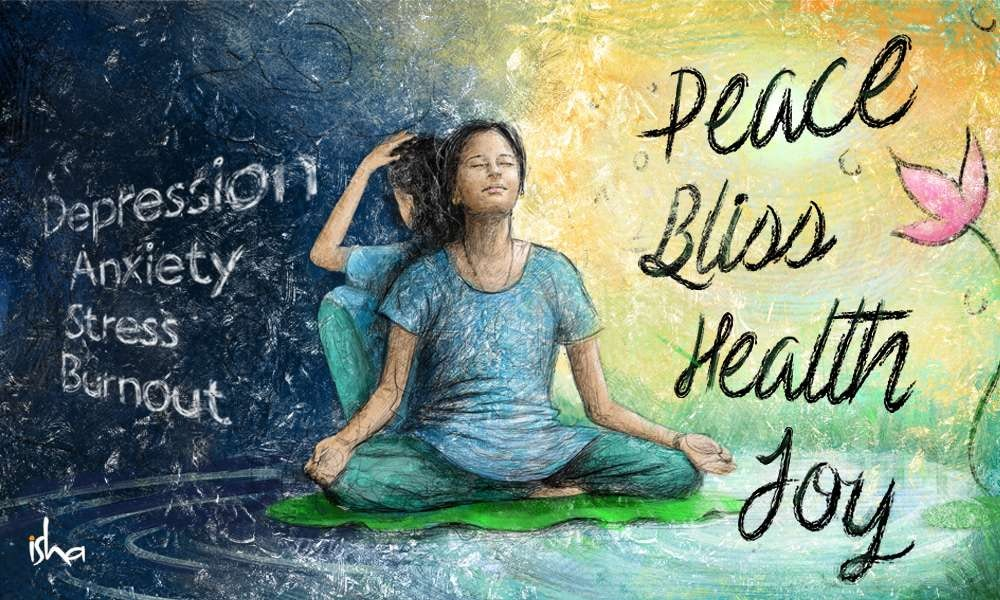
What does yoga have to do with mental health? Yoga, in its full form, can be a great asset when managing mental health triggers. While yoga itself is not a complete solution, it can be an asset when finding oneself in situations where stress, anxiety, or other needs surface.

Yoga asana, pranayama, and especially meditation can be tools we use on a regular basis to help us make it through tough situations. This, paired with regular therapy or visits with medical professionals, can truly turn the tide and improve mental health.

Resources:

National Alliance on Mental Illness

Mental Health Resources for Children

Detachment

Detachment is not that you own nothing, but that nothing should own you. {Alī}

Fear, anxiety, sadness…these are all emotions I’ve felt so deeply. It’s often felt as if they’ve owned me, they were how I defined myself.

Practicing detachment and grounding myself to the present has helped me release the hold these feelings have had on me. This doesn’t mean I don’t feel them. I do. Often. But they no longer own me. They no longer permeate my being. I am able to let these feelings go, using my yoga. And my Sangha.

How can we continue to practice detachment throughout our lives?

Here are some tips on how to embrace detachment:

  1. First and foremost, understand and accept that you can not control everything. This will take some time, but continue to remind yourself of this. Daily if necessary.
  2. Try to stop making your happiness or gratitude conditional on something outside of yourself. Don’t just say you’re happy because you’ve hit a goal, got a promotion, or got the thing you’ve been after. Express gratitude for the daily things in your life. Express happiness and joy for moments you’re experiencing daily.
  3. Recognize the difference between a need and a want. You need water. You want a fancy car.
  4. Try to reframe your experiences, your work responsibilities, everything you do as blessings.
  5. Try to practice compassion and empathy. Try to see the world from another’s point of view. Observe your surroundings rather than trying to constantly experience or control them.
  6. Don’t focus on the outcome or goal of a situation, focus on the experience of getting there. Whether it’s a trip or a project. Try to embrace the experience of it rather than just getting to the end of it.
  7. Before doing anything, pause. Take a deep breath. Proceed with clarity of mind and thought as much as possible.