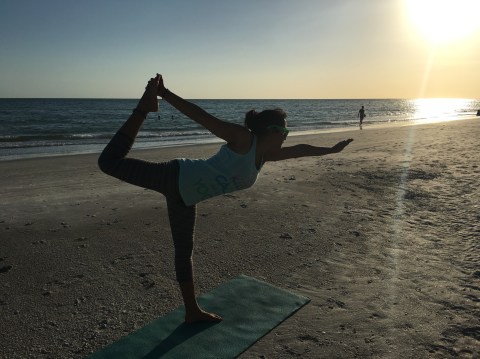
National Yoga Month

As we say goodbye to September, I’d like to note that September is actually National Yoga Month! To honor it, I’d like to present a few health benefits you can get from yoga:

1. Increases Flexibility

As you stretch and move through the yoga sequences, you’ll notice that over time, your body becomes more and more flexible. You’ll notice one day you were only able to touch your fingers to your shins, then a few weeks later your fingers grace your toes. Maybe after a few more weeks you can touch your toes to your knees!

As your muscles stretch and become more flexible, you may notice a decrease in pain in certain areas of your body too. Stretching and strengthening areas of your body, like your core, can help protect and reverse pain in other areas, such as your lower back!

Image result for flexibility

2. Builds Muscle

With flexibility also comes strength. Throughout your practice, especially those chatarungas, you’ll notice certain muscle groups become stronger. As those muscle groups become stronger, they’ll work to protect other parts of your body. Strengthening your thigh and calf muscles can help to protect your knees, for example.

Image result for building muscle


3. Improves Posture

This ebb and flow of strength and flexibility create a natural stacking in your spine and bones. Your alignment and posture naturally improve because each posture feels better when it is in proper alignment. Tuning into your body and really noticing how it feels in certain poses will help to improve your posture and protect your body from injuries and strain.

Image result for improving posture

4. Improves Breathing

The breath is one of the most basic and yet key aspects of the yoga practice, and of life! Through the melding of the breath and movement in each yoga pose, the practice opens your awareness allowing you to notice how you are breathing. This allows you to not only maintain but also improve your lung capacity. The longer you practice pranayama as well as the asana of yoga (that is, the breath and poses), the more you will notice you can breathe in for longer counts and exhale completely. This will help increase the amount of oxygen in your body.

Image result for lung capacity

5. Strengthens Bones

Certain poses, such as chatarunga and headstands, help the strengthen your bones. These poses are weight-bearing poses which force the bones, as well as the muscles, to really work to hold up the body. Plank is a good pose not only to help improve bone strength but also to strengthen the core muscles.
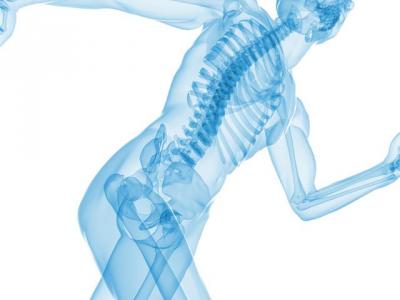
Image result for strengthen bones

6. Improves Joint Health

Like Tai Chi, yoga can help with joint pain. The flow through the yoga asanas really help lubricate the joints by stimulating synovial fluid. This fluid helps in the movement of your joints, so you don’t get bone to bone friction.

Image result for strengthen bones

These are just a few of the health benefits of yoga. Yoga not only helps the body physically, but it helps the mind too. By allowing the mind to be more present, the practitioner, or yogi, can really observe their body through the yoga sequence.

Yoga is ultimately a holistic practice, truly helping improve mind, body and spirit.

So Happy National Yoga Month to you all! I hope you continue to choose your own yoga adventure!

*All images from Google Images
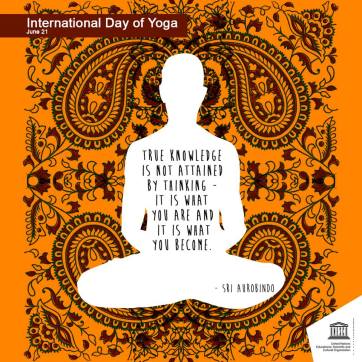
 

International Yoga Day

iyd

On December 11th, 2014, the UN General Assembly declared June 21st to be the International Day of Yoga. The declaration was a result of a call by India’s Prime Minister, Narendra Modi to make June 21st the International Day of Yoga. To the Assembly, Mr. Modi stated: “Yoga is an invaluable gift of India’s ancient tradition . It embodies unity of mind and body; thought and action; restraint and fulfillment; harmony between man and nature; a holistic approach to health and well-being. It is not about exercise but to discover the sense of oneness with yourself, the world and the nature. ”

June 21st, 2015 was the first official International Day of Yoga. Over 175 nations supported and sponsored the event. Celebrations included large scale community classes made available throughout many countries including the U.S., India, and Kenya. Making yoga available to the masses is one of the main goals of International Yoga Day. While many countries embrace yoga, access can be an issue. By providing free community classes, this day allows everyone to experience the magic of yoga. In 2016, the celebrations continued. Yoga studios around the world offered free classes the entire day as well as large scale community classes.

Let us hope this tradition continues to grow each year, allowing yoga to touch and heal the world around us. Embrace and celebrate the yogi within and remember to always respect where you are at. I look forward to celebrating each year and sharing yoga with everyone in my community.

iydofficial

Yoga Props

Yoga props can be a valuable addition to a yoga practice. BKS Iyengar, the founder of Iyengar yoga and one of the foremost yoga experts in the world, was a large proponent of using props throughout one’s yoga practice, especially beginners.

Yoga props can provide extra support and comfort when needed. They had also allow for deeper reaches in certain postures.

Props are usually straps (towels can be used in lieu of formal straps), blocks, and bolsters. Straps and bolsters are used to create extension and comfort, respectively. Straps and bolsters can also be used to allow for better alignment in specific poses. Blocks are used to support specific poses as well as to create more depth in them, especially in poses with twists.

I’ve tried three types of blocks each made from different materials, wood, cork and foam. The two best types were the cork and foam blocks. The wood type was best for supportive poses but not as great for creating depth. The foam block (purple pictured below) was great to use in poses which need more support, like seated poses, or poses which may require more depth, like half-pigeon pose. The foam material really allowed for both support and some give, so sitting on the block felt comfortable. The cork block (pictured left below) was best for support in standing, twisting poses as well as for creating depth in the twists.Displaying IMG_5332.JPGDisplaying IMG_5332.JPG

Overall, either block you chose will be helpful. All props are helpful in their own way and can really improve a yoga practice. Props will only help the yogi get the best out of his or her own practice. Props should not be seem as a crutch, but as a support method to help your body reach new poses and new depth.

Yoga for Back Pain

Chronic back pain is a common issue attended to by many physicians. While there are many medications available to manage pain, there are also very simple, low impact exercises that can reduce or even eliminate mild back pain all together.

Yoga is a great form of exercise that can ease pain and discomfort throughout the body. The great thing about yoga is that it allows one to focus on specific areas of the body if needed. There are many yoga poses that focus on stretching out the back muscles, thus potentially easing or eliminating back pain.

Here are some poses that can ease and reduce back pain (images from Google images):

Cat-cow

Start on your hands and knees with your spine neutral (think of your back as a table top). Use your breath to move between the two poses, breathing in during cow pose and out during cat pose. Move slowly and with intention.

Benefits of cat-cow:

  • Improves balance and coordination
  • Strengthens and stretches the spine and neck
  • Stretches the hips, abdomen and back
  • Massages and stimulates the kidneys and adrenal glands
  • Relieves stress and calms the mind

Downward facing dog

Press equally between your hands and feet. Press back, pulling your chest towards your thighs. Bend the knees and elbows to reduce pressure in the shoulders. Pull your heels towards the mat or floor (it is not required for your heels to touch the mat/floor).

Benefits of downward facing dog:

  • Calms the brain, relieves stress
  • Energizes the body
  • Stretches the shoulders, hamstrings, calves, arches, and hands
  • Strengthens the arms and legs

Half Pigeon (do pose on each side)

From downward facing dog take your right leg towards your arms and bring the leg down flat with your foot on the outer edge, facing the left hand. Square your hips and bend your right knee as much as is comfortable. Keep your torso up or fold it to the ground, being sure to listen to your body and making sure that your body isn’t feeling any pain. Repeat this pose with the left leg.

Benefits of half pigeon:

  • Stretches out hip rotators and flexors
  • Stretches out lower back and spine
  • Relieves tension

Standing forward fold

Stand with your feet together or slightly apart (about two fists distance), whichever feels more balanced. Gently fold from your hips, bending your knees as much as feels good. Take your hands to the floor or hold opposite elbows, using your arms to frame your head. Sway from side to side, slightly twisting at the waist. Settle into the forward fold, allowing gravity to pull your head and spine towards the ground. Stand in this pose as long as feels good. Roll your spine up slowly, one vertebrae at a time, coming into mountain pose (tadasana).

Benefits of forward fold:

  • Helps relieve stress
  • Stimulates the liver and kidneys
  • Stretches the hamstrings, calves, and hips
  • Strengthens the thighs and knees
  • Reduces anxiety

Supine twist (do pose on each side)

Lay flat on your back. Keep your left leg straight, take your right knee into your torso, and use your left arm to pull your knee to the left side. Take your right arm out to the right side, keeping your right shoulder blade to the floor, turning your head towards the right. You can take both knees bent together and twist them as well, whichever feels better for your lower back. Repeat this pose with the left leg.

Benefits of supine twist:

  • Helps release the lower back
  • Opens tight shoulders
  • Elongates spinal muscles
  • Calms the mind

Ease into each pose and create your own flow. Take time in each pose. Be sure to breathe deeply into each pose and if there is any pain adjust or come out of the pose.

Be sure to get professional medical advise before using these poses to treat any chronic or severe back pain.

Yoga for Weight Loss

Weight loss is a common denominator as a reason to initiate physical activity. There are so many quick weight loss programs on the market, with diet pills and juice cleanses, it is surprising anyone considers becoming physically active in the first place.

Yoga can be a very good, easy transition from a relatively sedentary life to a more active one. Rather than rush to the gym and join a P90X class (note, I am not against P90X or any other high calorie burning activity) one can have a smoother transition into physical activity. Why not try doing some yoga? Sounds simple enough, right?

Yoga is the perfect blend of cardio and strength building which is highly recommended to lose weight, tone the body, and gain muscle mass. While a regular yoga practice won’t lead you to be completely ripped or muscle man competition ready, it will help you become healthier, stronger, and help tone your body.

The best way to use yoga to successfully lose the weight is to remember that yoga ISN’T FOR WEIGHT LOSS. The purpose of yoga is to meditate and relax. If you only want to lose weight, yoga isn’t going to be the miracle exercise. Also, start slow. Don’t jump into a 110 degree 90 minute Bikram yoga session every day if you haven’t already practiced some form of yoga (especially if you haven’t experience any versions of hot yoga). Start with slow, show flows to ease your body into the poses and the allow your mind to get used to the relaxation and meditation.

Ultimately, to lose weight you will have to change more than the level of physical activity. Losing weight is done by having a full lifestyle change. Changing all habits, from eating to physical activity is the only way you will get to the healthy weight you want. Yoga is a perfect addition to this lifestyle change as it will help balance your mental health and physical health.

For yoga sequences for weight loss, do a quick search on YouTube. You’ll find anything from a 10 minutes sequence to a 90 minute one. Try them out and find something you like! You’ll only stick with something if you enjoy it.

Meditation vs. Yoga


The idea of sitting still for a fixed amount of time can seem fairly intimidating, even for yoga veterans. The popularity of meditation has not reached its peak as the physical practice of yoga asana (yoga poses) has. Meditation and yoga are actually supposed to be practiced simultaneously. The main goal of both meditation and yoga is to focus on the here and now. The separation of meditation and yoga may lead to one not receiving the full benefits of a practice. So many of the popular yoga practices, and even well versed yogis, don’t take enough time to simply be still and present.

The issue arises from our society’s emphasis on movement. We are constantly reinforced for multi-tasking, working harder, and just constantly being on the go. Even when it comes to health, the more you move, the better, right? What about balancing that movement with stillness? How can we balance our physical movement with mental stillness?

That is where meditation comes in. While stillness is unappreciated and undervalued, it is the one thing that can bring peace to our chaotic lives.

Meditation brings us many different benefits, both physical and mental.

Some of the physical benefits include:

  • Lowers blood pressure
  • Reduces anxiety attacks
  • Decreases tension-related pain
  • Improves mood and behavior
  • Improves the immune system
  • Increases the energy level

Some of the mental benefits include:

  • Decrease in anxiety
  • Improves emotional stability
  • Increases creativity and happiness
  • Gain clarity/peace of mind
  • Increases focus

To experience the benefits of meditation, regular practice is necessary. Just like yoga, it takes only a few minutes every day. It can and should be paired with an asana practice. Beginners to meditation, like yoga, should focus on the breath. While thoughts may enter the mind, visit them then let them go, refocusing on breathing. This will help you focus on the here and now rather than things in the past or future.So take a few minutes at your work desk or at home, in the morning or evening, and just be still.