New Year’s Thoughts

As we begin a new year, I see a lot of reflection on the past year, successes and short falls as well as commitment to new year’s resolutions and new goals. It has always been a mainstream belief that failures or short falls are bad and reaching or exceeding one’s goal is good.

What is we see “failures” as opportunities to understand challenges in a new way and plan for more realistic goals in the next year?

Here are some ways I have failed this year:

  • Did not pay off my student loans.
  • Did not sell all my books in my online bookstore.
  • Did not do yoga asana or meditate every day.
  • Did not meet my daily steps goal every day.
  • Did not cook at home the majority of the year.
  • Did not exceed my reading goal for the year.
  • Did not post on my blog each month.

But are these all really “failures”? I see them more as opportunities to understand what prevented me from reaching those goals and pivot, change my mindset to set myself up for success.

So in 2025, I hope to reach the following goals which I feel are more attainable:

  • Pay off 3 more of my student loans.
  • Sell half of the books in my online bookstore.
  • Do yoga asana and meditation 4 days out of the week.
  • Walk 1 mile each day.
  • Cook at home 4 days out of the week.
  • Meet 75% of my reading goal for the year.
  • Publish six posts in 2025.

Set yourself up for success in 2025. Understand what’s realistic. It’s okay to push yourself, but push yourself within the realm of possibility!

Happy New Year!

National Yoga Awareness Month

September has been dubbed “National Yoga Awareness Month”. The intention is to raise awareness of the practice of yoga and it’s numerous health benefits. While I tend to agree, yoga is a practice many may find useful and the benefits are immeasurable in my own personal life, I’m wary to join into the monthly “celebrations” honoring yoga as I find the western tendency to segment yoga into “parts” is antithetical to what yoga really is.

Yoga is a practice with multiple pieces. Many follow the eight limbs of yoga:

  1. Yama – duties directed towards others
  2. Niyama – duties directed towards the self
  3. Asana – physical postures
  4. Pranayama – breath practices
  5. Pratyahara – withdrawal of one’s senses
  6. Dharana – focus
  7. Dhyana – meditation
  8. Samadhi – enlightenment

All these limbs have further practices within them. Individually, they may have numerous benefits for the mind, body, or spirit. Together, they have immeasurable benefits to the mind, body, AND spirit. See the difference?

When we take one piece of the puzzle, it may be interesting, but we aren’t really understanding the bigger picture or how that one piece fits into the puzzle. However, when we take all the pieces together, with patience and time, we see the beauty of it all, we see the full picture. The practice of yoga, incorporating all aspects of the practice, allows us to live our full selves, grow into our fullest beings. These practices give us the tools to be the best versions of ourselves, live with empathy, love, and grace, embrace all that humanity has to offer while understanding the bigger, spiritual picture.

So this month, as we raise awareness of the practice of yoga and it’s numerous benefits, I challenge you (and myself) to focus on those aspects of yoga where you may not have as much practice, where you may see minimal emphasis, and try to dig deeper into that practice. See what it opens up for you.

Yoga for All – How Can We Make Brave and Expansive Spaces?

As we approach the end of Pride Month, I can’t help but notice all the social media posts promoting “inclusive yoga spaces”, spaces where communities are “safe” to be themselves in their fullest form. But what does a “safe” or “inclusive” space really mean?

In my experience, even spaces that are labeled as “safe” or “inclusive” have some kind of hierarchy or leader. When we’re trying to develop a community, shouldn’t we all have equal say in the group or circle, equal input into what’s happening? Shouldn’t each member of the community feel responsible or in charge of decisions? Likely, in many of these “safe” and “inclusive” spaces we enter, we are prone to the decision of others, following along passively.

Perhaps we should think about making spaces that are “brave” and “expansive”. Anyone trying to develop community can’t guarantee a space to be safe for everyone. No matter what we do, how many safe guards we make, triggers are everywhere and we can’t prepare for every single possible trigger for every single person who shows up. So what if we try to make spaces brave? A space where community members can feel willing and able to open up, push themselves in a way they weren’t able to before. And also create space for those who may not want to push themselves, but observe others in their ability to do so as an example of what they can work towards or open up to be. And what if we created spaces together, collaboratively, where there is no hierarchy or need to “invite” others to join, but there is an open door or no door at all. There is always room for anyone to join in and be part of the space, equally as important as those who came before.

As we work to build more equitable, expansive spaces for a diverse array of practices, it’s important to also make sure voices are being heard. Think about the space you want to create, who are you inviting to create the space with you? Would anyone be able to access and benefit?

Some communities to consider:

  • People living with disabilities
  • People living with chronic illness/pain
  • LGBTQ+ community members
  • BIPOC community members
  • Non-native English speakers
  • Immigrant/migrant community members
  • People living with different body types
  • People who have previously experienced incarceration
  • Youth/Transitional Age Youth

This is by no means an exhaustive list. It may inspire some thought into who is being represented and where there are gaps. It’s also important to recognize the intersectionality of individuals. Just because someone looks like they represent one community, does not mean that’s the only perspective they can have or should contribute.

Pranayama for Mental Health

Many of you know May is Mental Health Awareness Month. In many ways, Yoga is the perfect topic to discuss this month. There have been many studies showing the health benefits of yoga, from the physical benefits of asana to the mental health benefits of meditation. One thing that may not get as much attention is Pranayama and the mental and physical benefits of the various Pranayama practices.

Pranayama, as B.K.S. Iyengar calls it, is the yogic art of breathing. In his book, Light on Pranayama, Iyengar says “Pranayama is a conscious prolongation of inhalation, retention, and exhalation. The practice of Pranayama develops a steady mind, strong will-power, and sound judgement.” Pranayama is one of the eight stages of yoga, an integral part of any practice.

There are many different types of Pranayama practices. Some are great for increasing energy, some are great for bring about a sense of calm, and others are great for creating balance. Generally when it comes to breath practices, if the focus is on longer inhales and shorter exhales, these types of Pranayama increase energy and bring a little heat to the body. If the exhale is longer than the inhale, these Pranayama practices bring a sense of calm to the body, triggering our parasympathetic nervous system, our body’s natural calming system. A more even breath, inhale to exhale, bring energetic balance to our systems.

As we wrap up Mental Health Awareness Month, I wanted to offer a few Pranayama practices that have helped me in my own mental health journey as I’ve grown my yoga practice.

  • Nadi Sodhana – this has been the most helpful to maintain calm and still my mind. Whenever I’m feeling stressed or anxious, this pranayama practice helps bring me back to the present.
  • Kapalabhati – great for when I’m feeling low in energy, helps me start the start with a little bit of exhilaration.
  • Diaphramatic Breathing – this was very useful to me during panic attacks and when I was in triggering situations. It helped me feel grounded and connected to the present moment.

I practice these Prayanama techniques fairly regularly and have seen a significant improvement in my mental health. I hope they help you too!

Back to the Beginning…

2021 was not my year for yoga. I thought it would be, I thought it would be the year I soared in the yoga world, maybe even made it better.

But I crashed. Hard. I flew too close to the sun and my wings melted and I felt back to Mother Earth.

Some would term this an existential crisis in yoga and they would be right. I gave in. I stopped teaching regularly and I stopped practicing regularly. I lost my practice. I tried to come back to it, time after time, yet something just wasn’t right. So I gave in to figure out what was going on with me and my yoga practice.

So I started doing other things. I grew a garden, I baked, I baked with ingredients from my garden. I traveled to see family and friends. I did a lot of things that nourished me and made me start to feel whole again. As I started to feel whole, I started to feel called to yoga once again. I started to miss the meditations and the asana practices. I started to miss the person I was when I practiced regularly.

So, here we are in 2022 and I’ve rededicated myself to my yoga practice. I have begun to wake up early and take classes. I’m back to being a student again, back to finding my love of yoga. I’m glad you’re still here for the ride!

Bringing Yoga to Diverse Populations

A lot of folks hold strong stereotypes when they hear I’m a yoga instructor. They assume I work at a studio and teach asana based yoga classes. When I clarify, saying I’m a trauma-sensitive yoga instructor, many people are confused. The conversation usually goes one of two ways, I describe what trauma-sensitive yoga is in detail or I’m asked what the difference is between what I do and what “mainstream” yoga is. When I further describe sites I work at, such as addiction treatment programs and jail programs, it seems even more confusing for some. I get asked why these populations need yoga, why people who have “done something wrong” need it.

Instead of typing out a clarifying blog post, I’m going to let me own words speak for themselves. Here’s a recent interview I did for the Beyond Theory podcast, a podcast for The Meadows Behavioral Health.

Beyond Theory Podcast | S1 E12: Aditi Desai on Bringing Yoga to Diverse Populations

Check it out and let me know what you think! I hope this clarifies a lot of what I do and also what yoga can do for the world.

Accessible Yoga – Yoga for EVERY BODY

When you think of yoga, what images come to mind? You might see a very specific type of person. You might see a specific race, size, shape, and ability of that person. Imagine you’re walking into a yoga studio, who do you see?

As I’ve started to discuss in my last post, the Westernization of yoga has created this image of yoga that strays very far from the roots of yoga. While there are stories of yoga being restricted to men in India, there are stories and there is a history of people of all shapes, sizes, and genders practicing yoga. Now, as yoga has become a financial commodity, it seems that the population practicing yoga has narrowed. This brings me to my topic today, accessible yoga.

We live in a world where there is potential for variety. Depending on where you live, there may be a variety of foods available, a variety of leisure activities, and a variety of people. So why has yoga in the west seemed to cater to one type of person? Accessibility is a huge issue…not just in yoga but in many realms of life. Access to healthy, fresh foods. Access to transportation. Access to healthcare. So why aren’t we talking about access to yoga? This is a multi-billion dollar company in the west and yet somehow we are limiting it to a very specific type of person for a very specific price point.

We all know the benefits of yoga. We all know that it can help with physical, emotional, mental, and spiritual healing. So why is this only available to certain people? Even studios and classes that are low-cost or promoted to “everyone” seem to only be taught or attended by specific people. Why? Simply put…accessibility. This doesn’t just mean being able to get to the yoga studio or being able to pay for the class. This means being able to do the poses comfortably, being able to do the breath and meditation practices comfortably. This lack of accessibility affects many populations, including but not limited to people of color (POC), larger bodies individuals, people who identify within the LGBTQIA community, people living with differently abled bodies, and people who may not speak or understand English well.

So what do we do? What do we, as yoga teachers and students do to make sure EVERYONE has access, in every way, to the wonderful practice of yoga? Well, I’m glad you asked.

Here are just a few of my tips to make your studios and classes more accessible (in no specific order):

  • Hire POC teachers
  • Hire larger bodies teachers
  • Hire teachers who identify as LGBTQIA
  • Provide classes in different languages
  • Promote chair yoga or accessible classes
  • Use props
  • Provide a variety of mat sizes and thicknesses
  • Do not use words like “full expression of pose” or “more difficult version”
  • Use words like “modification” or “adjustment”
  • Use invitational language
  • As a teacher, model these modifications and adjustments
  • Incorporate pauses
  • Allow students to decide what feels good for them
  • Use consent cards for hands on adjustments
  • Ask permission before using essential oils or scents
  • Attend/offer trainings for accessible yoga
  • Provide all-gender or gender neutral restrooms

This is not an exhaustive list. There are many more ways to make classes more accessible. Let’s start by being open and welcoming to EVERYONE.
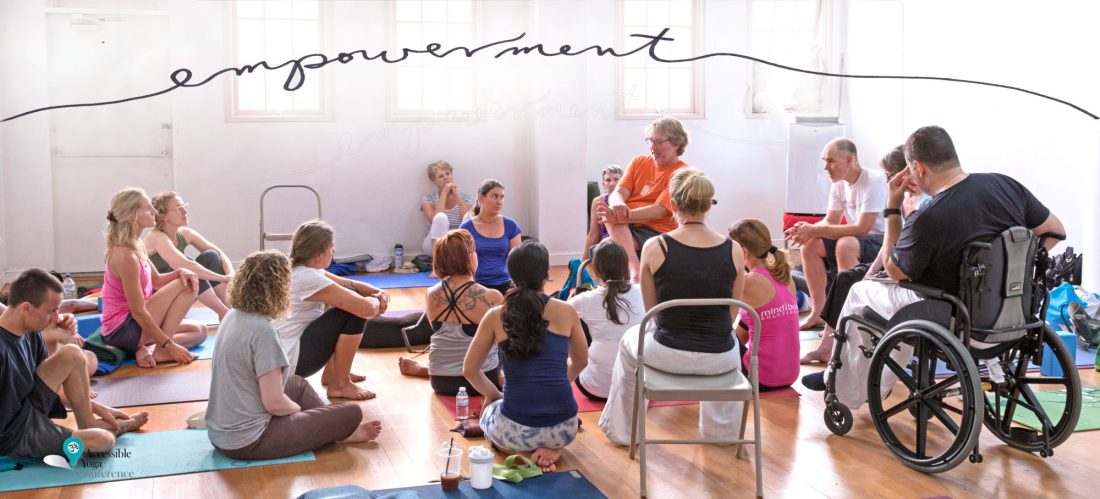
Image result for accessible yoga

National Yoga Month – Honoring Yoga History and Culture

September is National Yoga Month. As yoga has become a multi-billion dollar industry, there are plenty of ways in which this month can be celebrated. Lately, however, it seems that a lot of yoga practice in the U.S. has been seen as potential cultural appropriation. This has become a hot topic recently between yogis all over the U.S. How are we appreciating yoga and its culture without appropriating it? How are you honoring yoga in all it’s forms? Is it possible that where you practice yoga is sterilizing the culture of yoga?

If you’re thinking it can be difficult to understand what is appreciation and what is appropriate, you’re not wrong and you are not alone. It’s difficult to understand where the line is.

Many yogis are discussing this exact topic. In order to stop cultural appropriation, we need to acknowledge the roots and origins in India. We need to acknowledge the cultural and religious ties yoga has to South Asian countries. Understanding these connections can help one appreciate and practice yoga more authentically. By incorporating cultural appreciation by opening up to understanding and learning, we can prevent the cycle of appropriation from continuing.

Here are a few questions to ask about your local yoga studio:

  1. Are people of Indian heritage represented?
  2. Are cultural or religious symbols displayed appropriately?
  3. Do teachers use Sanskrit as a way of growing the yoga practice or as a way to divide teachers from students?
  4. Are the lineages of the yoga teachers identified and honored?
  5. Do students and teachers wear clothing that display gods and goddesses in areas of the body that are considered disrespectful or harmful to the culture and religion?
  6. Is the yoga studio accessible to all levels and abilities?
  7. Does your studio work to create community and inclusivity?
  8. Do the yoga classes focus only on physical asana?
  9. Does the studio’s yoga teacher training go over cultural history?
  10. Is the studio purposely avoiding using Sanskrit or any South Asian representation?

These are very important topics to consider when practicing yoga, at home using YouTube or at a studio. While we can make yoga available and accessible to all, it’s important to honor the roots. While yoga itself is not a religion, it has many ties to Indian religions and culture. By honoring all that yoga has to offer, not just physical but full body, mind and spirit, we can truly appreciate yoga. By honoring the history of yoga, we can better understand where it came from and why it has been so popular for generations.

So next time you go to a yoga studio or click on your favorite YouTube yoga video, take a look around and observe what may or may not be appreciation and appropriation.

YogaCulturalAppropriation

Yoga Stereotypes

Stereotypes aren’t great. In all of life…whether it has to do with gender, culture or ethnicity. This applies to yoga as well.

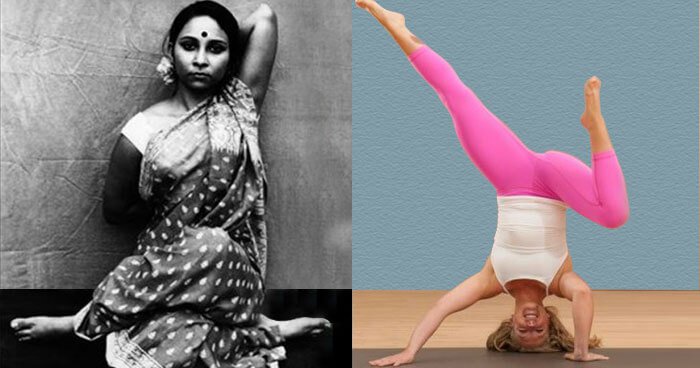
I’ve recently been finding a resurgence of questions in my yoga classes that are based on stereotypes or assumptions of what the yoga class is going to entail. So many of my students ask me when they’ll be able to sit in full lotus pose. Others ask me when they’ll be able to do headstands and handstands. These questions are often on their first or second classes. These questions are also often asked in my meditation sessions. Students will ask when will I be able to sit straight without pain? When will I be able to clear my mind completely? I continue to reinforce the idea that asana isn’t about the pose, but about what the pose brings up for you. Meditation isn’t about clearing the mind, but calming it. The emotions, the sensations, the feelings, these are the things we want to focus on…but it seems like there’s so much focus on the physical look of what we are doing, whether it’s asana or meditation, that the deeper benefits get lost.

Other stereotypes I’m met with is about what it means to be a yogi. So many people think I have to be a healthy eater, that I don’t eat any sugar or carbs. Oh, if only I had that kind of self-control. Yes, I generally do eat healthy, AND I love my cakes, ice cream, candy, and donuts. Another stereotype related to what it means to be a yogi suggests that yogis can’t get mad, upset or frustrated. That we don’t have violent thoughts. Now correct me if I’m wrong, but am I not a human being? First and foremost. These thoughts, these feelings…they will always be there. Yogis aren’t all sunshine and rainbows…prayer beads and crystals. We are human beings and have the same range of emotion as anyone else. The trick is how we react to those emotions. The yogic part of me doesn’t react. I let the emotions run their course and when I’m calm and relaxed I make decisions related to the situations that previously frustrated me.

That’s what it means to be a yogi…making mindful decisions about life. Whether it’s what you eat, what pose you’re doing, or how you react to a situation.

So…if you ever notice your yoga teacher eating a candy bar while ranting, don’t say “oh wow, aren’t you a yogi?”. Just treat them like a human being who is having one of those days.

IMG_20181212_202318


Flow Breakdown – Moon Salutation

Surya Namaskar, or sun salutations, are common in most yoga classes. Not so common in our yoga classes is the Chandra Namaskar, or moon salutation. The moon salutation flow was designed to honor the feminine qualities we all carry. No matter what gender identity you hold, there are masculine and feminine qualities in all of us. The moon salutation is a great way to ignite that feminine energy.

Here’s the flow breakdown:

  • Mountain Pose
  • Crescent Moon Pose
  • Goddess Pose
  • Star Pose
  • Triangle Pose
  • Pyramid Pose
  • Low Lunge
  • Half Split
  • Full Squat/Malasana Pose
  • Half Split
  • Low Lunge
  • Pyramid Pose
  • Triangle Pose
  • Star Pose
  • Goddess Pose
  • Crescent Moon Pose
  • Mountain Pose

Not only does this sequence open up the feminine energy within, it’s also great for women to do during menstruation or pregnancy. This is a great flow to honor intuition, nurturance, and receptivity…all feminine qualities that bring up our community.

Image result for moon salutation